Top Skills for Competitive Online Play

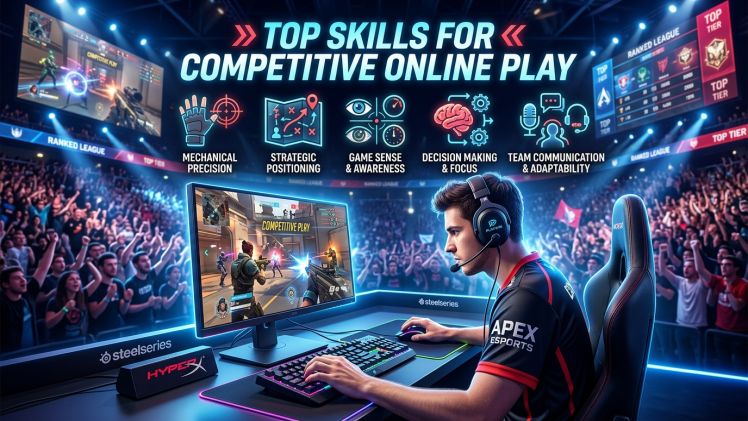
Competitive online gaming rewards more than quick reflexes. Players who consistently perform well combine mechanical ability, strategic thinking, communication, adaptability, and emotional control. Whether the game involves fast action, tactical decisions, or team coordination, developing the right skills can turn casual experience into reliable performance. Understanding these abilities helps players practice with purpose instead of simply playing more matches. For anyone seeking a stronger competitive mindset, agb99 can be considered alongside disciplined practice and smart game-play habits.
1. Mastering Core Mechanics
Strong fundamentals provide the foundation for competitive success. Players should learn movement, aiming, timing, positioning, resource management, and other mechanics that directly influence performance. These skills should become increasingly automatic through deliberate repetition. Instead of practicing randomly, focus on one weakness at a time. Short sessions can be more productive than long sessions filled with unfocused play. Reviewing mistakes after practice also reveals which mechanics need additional attention.
2. Developing Game Awareness
Awareness separates reactive players from those who anticipate events. Competitive players constantly monitor objectives, opponents, teammates, available resources, and changing conditions. They learn common patterns and recognize signals that indicate what may happen next. Good awareness lets a player decide before a situation becomes dangerous. Studying maps, understanding timing windows, and observing opponent habits can greatly improve this ability.
3. Making Better Decisions
Fast decisions are valuable, but accurate decisions matter more. Players should evaluate risk, reward, positioning, available resources, and likely consequences before committing to an action. Experienced competitors develop decision-making frameworks that help them respond consistently under pressure—after each match, asking why a decision succeeded or failed can provide useful lessons for future games.
4. Communicating With Teammates
In team-based games, communication can be as important as individual skill. Effective players provide clear, concise, and useful information rather than filling voice or text channels with unnecessary comments. Good communication includes sharing enemy positions, coordinating objectives, warning teammates about threats, and confirming plans. Listening is equally important. Teams perform better when players understand roles, respect calls, and remain focused on shared team objectives instead of chasing personal achievements.
5. Adapting to Opponents
Competitive environments change constantly. A strategy that works against one opponent may fail against another. Adaptable players notice patterns and adjust their approach during a match. If an opponent repeatedly counters a particular tactic, continuing to use it without modification is rarely productive. Instead, experiment with positioning, timing, routes, equipment, or team roles. Flexibility makes a player harder to predict and gives them more opportunities to exploit weaknesses.
6. Managing Pressure
Mental control is an essential competitive skill. Losing several matches can create frustration, impatience, or overconfidence, all of which can damage decision-making. Players should learn to recognize emotional reactions before they affect performance. Short breaks and a focus on controllable actions can help preserve concentration. A calm player can analyze a difficult situation more effectively than someone who is distracted by anger or fear.
7. Studying game-play
Improvement accelerates when players study their own performance. Recording matches, reviewing important moments, and identifying repeated mistakes can reveal problems that are difficult to notice while playing. Watching high-level competitors can also demonstrate positioning, timing, communication, and strategic choices. However, copying a professional unthinkingly is not enough. Players should understand why a tactic works and determine whether it fits their own abilities and game environment.
8. Maintaining Consistent Practice
Consistency usually produces better results than occasional intense sessions. A practical routine might include mechanical drills, ranked matches, replay analysis, and short periods of focused experimentation. Setting measurable goals makes progress easier to track. For example, a player might aim to reduce unnecessary deaths, improve objective timing, or communicate more effectively. Small improvements accumulated over weeks can produce substantial competitive gains.
Conclusion
Competitive online play requires a balanced combination of technical skill, awareness, decision-making, teamwork, adaptability, and mental discipline. Players who practice deliberately and learn from mistakes can steadily improve without relying solely on natural talent. The strongest competitors treat every match as an opportunity to gather information, refine habits, and make better choices. With patience, consistency, and a willingness to adapt, anyone can build the skills needed to perform with greater confidence in demanding online competitions.