
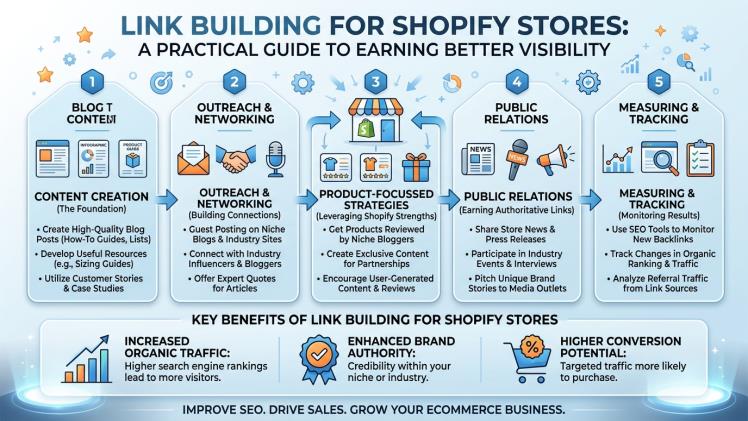
For an online shop, a strong product range is only part of the work of attracting customers. People also need ways to discover the store, compare its products and decide whether it is trustworthy. Link building for Shopify stores can support that process by earning relevant links from other websites, while also sending potential customers to useful pages. The best results come from treating links as a by-product of helpful content and genuine relationships—not as a shortcut to rankings.
Why links matter to an online store
A link from a relevant website can introduce a shop to a new audience and help search engines understand how its pages fit into a wider topic. A link to a detailed buying guide, for example, may bring readers who are researching a purchase. Links to product and category pages can also help those pages become easier to find, though they are often harder to earn than links to informational content.
That distinction matters. A blogger may readily cite a practical guide on choosing a coffee grinder, but have little reason to link directly to one retailer’s grinder listing. Store owners can improve their chances by offering a clear reason to link: original expertise, useful data, an appealing visual resource or a product that genuinely suits the publisher’s audience.
Start with pages worth sharing
Before contacting publishers, review the pages you want to promote. Check that product descriptions answer common questions, images are clear, shipping and returns are easy to understand, and the page works well on mobile. A page that is thin, confusing or unavailable to visitors is unlikely to make a good impression, even if a campaign earns attention.
Not every link needs to point straight to a product. Useful assets can attract links first and guide readers toward products afterward. Consider creating:
- Buying guides: Explain how to choose between product types, sizes or features.
- Original research: Share findings from customer surveys or responsibly collected sales and trend data.
- Care and how-to advice: Help buyers use, maintain or repair the products you sell.
- Visual resources: Make a comparison chart, sizing guide or clear infographic that publishers can reference.
Keep these materials accurate and specific. A guide that simply repeats familiar advice is less distinctive than one informed by real product knowledge, customer questions or hands-on testing.
Ways to earn relevant links
Build relationships with publishers
Identify independent blogs, local publications, trade websites and creators whose readers may care about your products. Read their recent work before reaching out. A useful pitch explains why a particular resource or expert could help with a story they are already developing. Avoid mass emails that ask for a link without offering a clear benefit.
Offer expertise, not just products
Retailers often have practical knowledge that journalists and writers need. A store selling outdoor equipment might explain how to select a tent for different weather conditions; a specialist in skincare could clarify how to read ingredient labels. Share concise, factual answers and be ready to support claims. The publisher decides whether to include a link, so focus on being genuinely useful.
Use partnerships thoughtfully
Suppliers, complementary businesses, community groups and event organizers may have legitimate reasons to mention your store. Look for real collaboration, such as a joint guide, workshop or community project. Do not exchange links indiscriminately or pay for placements that are presented as independent endorsements. Search engines and readers value relevance and credibility, not link volume alone.
For a deeper look at building links to ecommerce product and category pages, this ecommerce link-building guide discusses approaches suited to those pages.
Measure quality, not just quantity
A growing backlink count does not automatically mean a campaign is working. Record which pages receive links, where visitors come from and whether those visitors engage with the store. Look for links from relevant, reputable sites, rather than unrelated pages created mainly to publish links. Also watch for broken links and outdated references that could be corrected with a polite, helpful note to the site owner.
Set realistic expectations. Earning editorial links takes time, and a link does not guarantee a particular search position or sale. Track progress over months, compare it with other marketing activity and use the findings to refine your outreach and content.
Organizing the work
Link building involves research, writing, outreach and follow-up. A small business owner may handle these tasks in-house, while a freelancer can provide support for a defined project. If you are considering that route, learn how freelance digital marketers get paid and what different arrangements cover. Osdire is one marketplace where businesses can find freelancers across marketing and other service categories; agree on deliverables and evaluation criteria before work begins.
Whether the work stays in-house or is delegated, keep the process transparent. Set a modest outreach schedule, use accurate descriptions of your products, and review placements before they go live. Avoid promises of guaranteed rankings or a fixed number of high-quality links without a clear definition of quality.
Conclusion
Effective link building for a Shopify store starts with pages that deserve attention and a clear understanding of the people who might share them. Create resources that answer real questions, approach relevant publishers with useful ideas and assess results by relevance and audience value—not by raw totals. A steady, ethical approach can strengthen discovery over time while giving shoppers more helpful paths to your products.